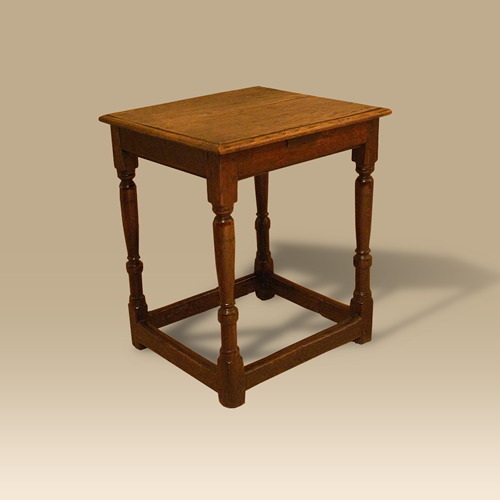
A Late 17th Century oak Altar Table fitted with a two plank top with end cleats raised on turned legs united by a box stretcher. Period restorations.
A late 17th /early 18th Century antique Portuguese writing table fitted with two working drawers and two dummy drawers, raised on turned legs. Period restorations.
Fitted with two drop leaves over a single drawer raised on tapering fluted legs terminating in briganza feet with the drop leaves. Single gate leg action. Height: 28.00 inches
An Early 19th Century Oak Tripod Table. Fitted with an oval piecrust top with a hand painted coloured print affixed and birdcage movement raised on a turned support with three legs.
An Early 19th Century Mahogany Rim Top Tripod Table. The turned fixed top on
Diameter: 14.75 inches
Height: 25.25 inches
The planked oak top framed with a yew surround and an inlaid yew star to the centre. Raised on walnut clustered turned column legs united by an architectural yew wood shaped frieze and shaped walnut stretchers. Raised on the original bun feet. Circa 1690.
Fitted with a planked thick top over an oak trestle base - of good colour and in original condition.
A Mid 19th Century Oak Cricket Table. An unusually low oak cricket table dating from the mid 19th Century - fitted with a circular planked top of good colour with three legs below united by a tri-form stretcher. The legs, stretchers and frame all with stop chamfered edges making this table higher quality than most.
The planked top over a single frieze drawer raised on turned supports united by peripheral stretchers. Great colour.
A Late 18th Early 19th Century Cricket Table. Fitted with a thick primitive turned and figured one piece elm top of exceptional colour supported by three shaped ash legs.
A Superb 18th Century Beech & Oak Farmhouse Table. The planked top over a single frieze drawer - raised on a shaped trestle base. Good original colour - period restorations.
A Rare Early 19th Century Yew Wood Tripod Table. The planked turned top supported by a turned column support raised on three shaped tripod legs. The entire table made from yew wood and of a wonderful colour with the original patination. A rare table of it's type.
A Primitive Late 18th Century Walnut Cricket Table. The shaped walnut top raised on three shaped ash and pine legs - useful size and good colour.
A 17th Century Oak Side Table. Fitted with a moulded edge planked top over a frieze drawer, raised on turned legs united by stretchers. Exceptional colour.
A 17th Century Spanish Walnut Table. Fitted with a framed single planked top raised on a fluted, splayed leg trestle base. The legs fitted with stretchers and supported by shaped iron work supports. Exceptional colour and original patina with period restorations.
A Late 17th Century Yew Wood Side Table. Fitted with a moulded top over a single drawer with a moulded drawer front and raised on a turned leg base united by peripheral stretchers. A rare table being constructed in yew wood and of good colour.
A 17th Century Low Oak Table. The planked top over a shaped frieze containing a single drawer – raised on turned legs united by a central stretcher. Good colour –period alterations.
A 17th Century Oak, Beech and Chestnut Trestle Table. Fitted with a single plank chestnut top raised on a trestle base constructed from beech and oak and a table that comfortably seats up to 10 people. Period restorations and replacements but a table of good colour and wear consistent with a piece of this age.
A Mid 17th Century Oak Side Table. Fitted with a plank top with a moulded edge over a turned leg base united by a peripheral stretcher. Original condition and of a good colour.
A mid 19th Century oak armchair with a decorative cresting rail depicting two cherubs, over an upholstered padded back and seat. Fitted with acanthus carved scroll arms supported by octagonal front tapering legs.
A harlequin set of six Early 19th Century clisset style antique chairs, fitted with plank seats and with spindled backs.
A 19th Century Windsor Armchair. Fitted with a pierced back splat, turned arm supports and raised on double ring turned legs united by a straight stretcher.
An Exceptionally Rare Oak Chair Dating Circa Mid 16th Century. Fitted with four turned supports united by shaped arm rests and a solid plank seat, raised on sledge feet.
A Circa 1700 Oak Armchair. Fitted with a lifting seat below a shaped back with a central solid back splat.
An Early 19th Century Burr Elm Stool. The highly figured elm top supported on three turned legs. Excellent colour.
A Harlequin Set Of 10 Mid 19th Century Spindleback Chairs. The chairs backs with two rows of turned spindles over rush seats, raised on turned legs with pad feet united by peripheral stretchers. Good colour and ready to use.
A Late 18th Early 19th Century Oak Cheese Stool. Fitted with a turned swivelling top raised on a turned column on a tripod base. An unusual item from Hawes.
A Mid 19th Century Elm Seated Child's Chair. Raised on turned legs united by stretchers, good original colour and patina.
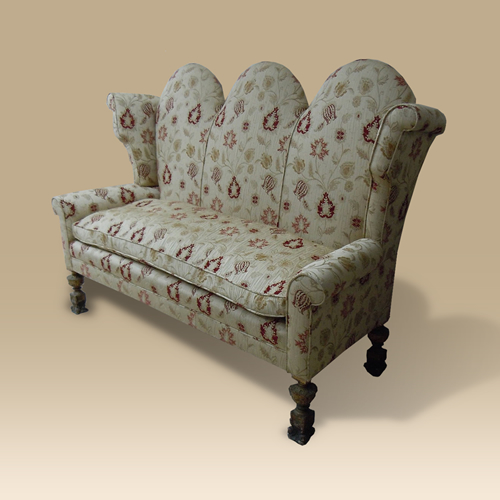
An 18th Century Wing Back Settee. The three humped back in typical Queen Anne style with returning wing arms above a loose cushion seat raised on carved and gilded legs. Fully restored and reupholstered in exceptional condition. Circa 1780.
A Pair Of 19th Century Upholstered Armchairs. The raked back above a padded seat with carved and gilded arms - raised on a turned walnut leg base united by stretchers with carved and gilded paw feet.Price for the pair
A 17th Century Oak Wainscot Chair: Fitted with the original carved and panelled back, shaped arms and planked seat supported on turned legs united by peripheral stretchers. An honest chair and useable chair with period restorations/replacements.
An exceptionally rare Gothic throne Circa 1450 - 1500 depicting fine Gothic tracery of exceptional quality - with the uprights terminating in carved finials. The lifting hinged seat flanked by the original shaped arm supports with linen-fold panels below and also to the front.
A True Set Of Six Late 18th Century Elm Dining Chairs. A good set of country chairs dating to circa 1780 - each with a shield back, pieced back splat, drop in rush seat - raised on square tapering legs united by stretchers. This is a really good set in sound condition of excellent colour and decent figuring to the elm frames.
A 17th Century Oak Wainscot chair. This is an early chair of simple form – fitted with a plain panel back below a shaped cresting rail with shaped arms and a plank seat raised on turned legs united by peripheral stretchers and with a turned front stretcher - Super colour.
A Superb 17th Century Walnut Chair. Original condition and of an excellent rich colour and patina. The shaped cresting rail fitted with turned finials and an inlaid star above an inset panel back flanked by split turned bell shaped mouldings. Fitted with broad arms with turned arm supports – the original planked seat – and turned legs united by peripheral stretchers. An exceptional and rare example of an early chair of this type.
A True Set Of Late 17th Century Oak Yorkshire Back Stools Circa 1680. Dating from the period of Charles II- good colour-period restorations-stable condition.
A Mid 17th Century Oak Joint Stool. Fitted with a planked top over a carved frieze raised on turned legs united by stretchers.
A Mid 18th Century Inverted Breakfront Lancashire Oak Dresser Base. Fitted with three frieze drawers over a central cupboard flanked by a tier of drawers on the left and right. Decorative column decoration on all the front facing corners. Various repairs consistent with a piece of this age but nothing major.
A Superb Mid 17th Century Oak Low Dresser Circa 1650. Fitted with three cushion moulded geometric fronted frieze drawers. The base raised on four turned front legs united by turned matching stretchers.
An Early 19th Century Oak Dresser. Originating from Anglesey, this dresser is fitted with the original shelved and boarded rack sitting on the breakfront base which is fitted with three frieze drawers and two cupboards flanking a central bank of dummy drawers. Exception colour with various inlay decoration.
A Mid To Late 18th Century Oak Dresser. The planked top over three cross banded drawers with a decorative and shaped frieze below - raised on cabriole front legs with square chamfered rear legs. Overall a good colour with the original patina - well proportioned.
A Mid To Late 18th Century Oak Pot Board Dresser.The original boarded rack fitted with three shelves above the base which is fitted with three drawers raised on four turned front legs united by a pot board. Exceptional colour and original patina.
An 18th Century Elm Dresser & Rack. The shelved rack fitted with the original figured elm back boards over a two drawer base fitted with two cupboards below. Exceptional colour and a wild grain.
A small, rare, antique Mid to Late 16th Century two door cupboard - fitted with two panel doors and raised on sledge feet. Original carving throughout. Period restorations.
An 18th Century oak armoire from Northern France. The two panelled doors enclosing a deep interior. Raised on extended stile supports.
A mid 18th Century antique solid elm wall cupboard, fitted with a single panelled door enclosing a shelved interior. Excellent colour, wall brackets.
A small proportioned 18th Century Welsh deuddarn, fitted with two fielded panelled top doors over 3 drawers above a pair of multiple panel base doors.
An extremely rare Circa 1500 Oak Dressoir. Fitted with a planked top over linenfold and floral carved panel sides, the front with two carved vertical panels flanking a carved door with ornate metalwork over two drawers.
A Rare Mid 17th Century Oak Food Cupboard. The single door with two banks of turned spindles for ventilation enclosing a shelved cupboard interior. Good colour and original ironwork.
A Very Fine Late 16th Century Early 17th Century Oak Joined Press/Court Cupboard. This cupboard most likely Elizabethan has a planked top with moulded cornice above a profusely carved frieze embellished with mythical beasts, supported by carved bulbous cup and cover balusters.
A Late 18th Century Oak Dressoir. Fitted with a pair of carved doors over two drawers with carved fronts, raised on ornate turned front legs with linenfold panelled sides and similar linenfold panels to the rear of the open base. Period restorations.
Fitted with two doors decorated with intricate Gothic tracery. The four panelled sides with Gothic parchment panelling, raised on extended stile supports. Extremely rare, wonderful colour - dating to Circa 1470 - 1510.
A Mid 16th Century Oak Four Door Cupboard. Fitted with the original ironwork and with a pegged construction. Good colour - original condition and from the Basque region.
Antique desk with original carving, initialled and dated 1714. Fitted with a rising lid enclosing a drawered interior with brass knobs, raised on an integral turned leg base united with peripheral stretchers.
The planked top over four drawers fitted with intricate geometric mouldings, fitted with drop handles raised on turned bun supports with panelled sides.
A Superb Early 18th Century Burr Yew Wood Chest Of Drawers. This is a country made piece of furniture dating to Circa 1710 - fitted with solid burr yew wood drawer fronts and top with the carcass veneered in yew and burr oak. Of wonderful colour with the original patina – raised on turned bun feet. Truly exceptional and an unrepeatable 'one off'.
A 17th Century Oak Chest Of Drawers. Fitted with two short over three long drawers with geometric moulded drawer fronts. Of good overall colour and raised on turned bun feet.
A Mid 16th Century oak planked
A late 17th Century oak coffer, fitted with a planked top over a three panelled carved front. Excellent colour.
A late 17th/early 18th Century upholstered antique ottoman, raised on shaped and carved walnut feet. Period restorations. Some original needlework.
A 17th Century Panelled And Carved
A Rare Late 16th Century Early 17th Century Walnut Bargueno. This rare walnut Bargueno is constructed from solid walnut and decorated with gilded and pierced metal ornamentation behind which is red faded silk and fitted with a spectacular lock, gothic tower hasp and key all original.
A 17th Century Leather Bound & Studded Domed Carrying Box. Raised on a separate stand with studded leather front.
A Mid 15th Century Oak Chest From The Midi Pyrenees. Profusely carved and in wonderful original condition with few restorations. Exceptionally rare.
A Late 17th Century Oak Two Panelled Coffer. Of good colour and small proportions fitted with carved two panelled front and sides, raised on stile supports. Oak box with period restorations.
The single plank shaped and rising top secured by ornate pierced strap work hinges above a fully fitted casket with a fall front. The interior profusely carved and fitted with five open compartments and a candle box above four dummy drawers over two banks of three drawers.
A Superb 15th Century Oak Chest Covered In Intricate Blind Gothic Tracery. An exceptionally rare chest bought from Northern France in original condition with few repairs. Dovetail joinery first appeared in the fifteenth century as an alternative method of attaching the ends of a chest to the sides. Numerous examples exist, but this was not as common a technique as the hutch. Dovetail chests cannot use the extended-stile design of the hutch, and so dovetail chests never have legs. Probably because of its difficulty and therefore cost. The dovetail-joined chests of the fifteenth century were very well suited to complex tracery carving over the whole face.
A Gothic Carved Chest Dating To Late 15th Early 16th Century. This Gothic chest unusual in design with a dovetailed construction adjoining the sides, front and back planks. The lifting lid with later hinges above the chest with a deep carved intricate front depicting the original carved roundels and Gothic arches. The lock being a 17th Century replacement raised on later feet. Good colour and overall condition for an early piece of furniture.
A 16th Century Oak Chest. Constructed using six planks with hand cut dove tail joints to the corners and raised on the original feet fitted with a rising lid and wire hinges. Exceptional colour and original patina.
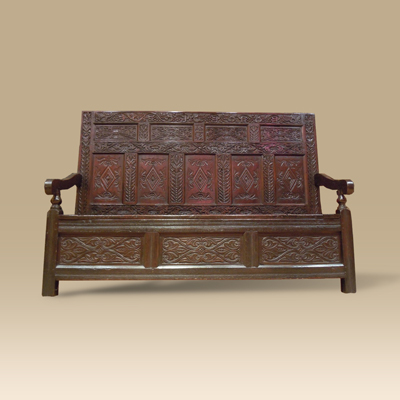
A rare period oak settle profusely carved and dated 1674 with the initials 'AS'. Fitted with a box base and hinged lifting seat and raised on extending stile supports . Good colour and overall condition with period restorations commensurate with age.
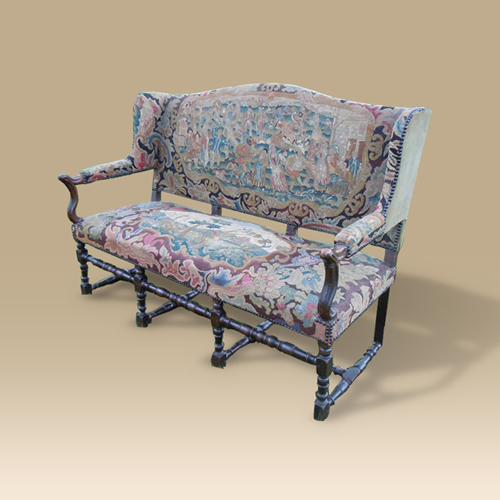
A Circa 1690 Walnut Framed Settle Covered In Early Needlework. The back of the settee depicting a country gathering of people dates to the mid 17th Century – the seat covering is slightly later and dates to the mid 18th Century.
A rare small 17th Century antique oak cradle, depicting heraldic images of griffins carved in relief onto the panels. Exceptional colour.
A Rare Late 16th Century Early 17th Century Walnut Bargueno. This rare walnut Bargueno is constructed from solid walnut and decorated with gilded and pierced metal ornamentation behind which is red faded silk and fitted with a spectacular lock, gothic tower hasp and key all original.
A Large Early 19th Century Needlework In The Original Frame. The gilded frame with the original glass and a plaque stating 'Charles 1st bids farewell of his children'. The needlework executed using both gross point and petit point in exceptional condition with no visible fading. Provided with provenance.
An Early 16th Century Oak Romayne Head Panel Dating To 1511 Of Exceptional Quality. Depicting a helmeted gentleman facing right surrounded by typical Renaissance foliate work embellishments. This panel is one of a pair but is priced individually.
A Period Carved Oak Panel Removed From A Reconstructed 16th Century Dressoir. Depicting the bust of a helmeted gentleman facing left within an oak leaf reef with stylised zoomorphic heads possibly dolphins.
An Eight Day Oak Long Case Clock By Thomas Clarke Of Burton. A clock made by Thomas Clarke of Burton dating to Circa 1770 with an eight day movement striking on the hour. The oak case of smaller proportions – the silvered and brass face with Roman numerals - the smaller dial showing seconds – the small aperture showing the date. A well proportioned clock that is smaller than most with backboards replaced in the 19th Century.
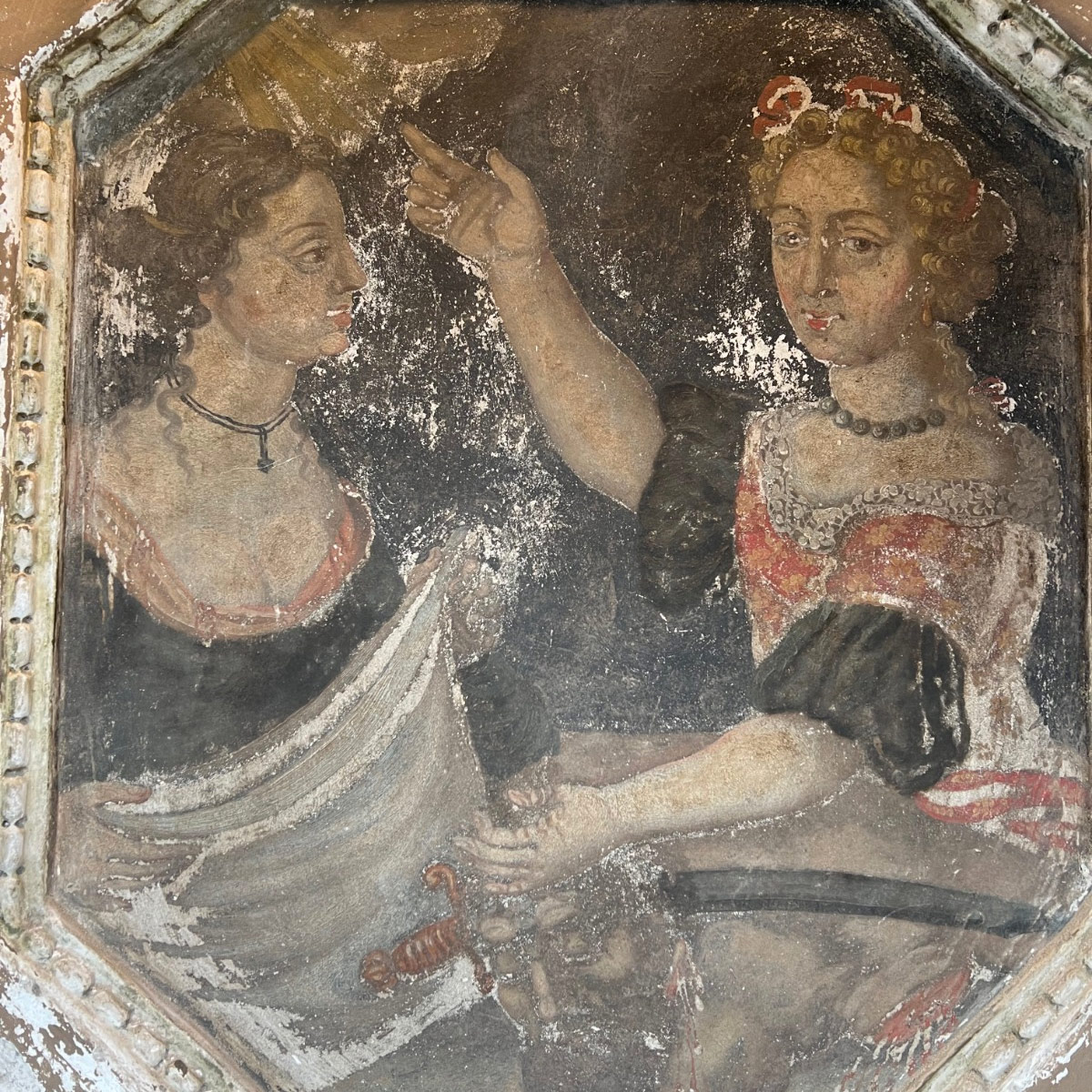
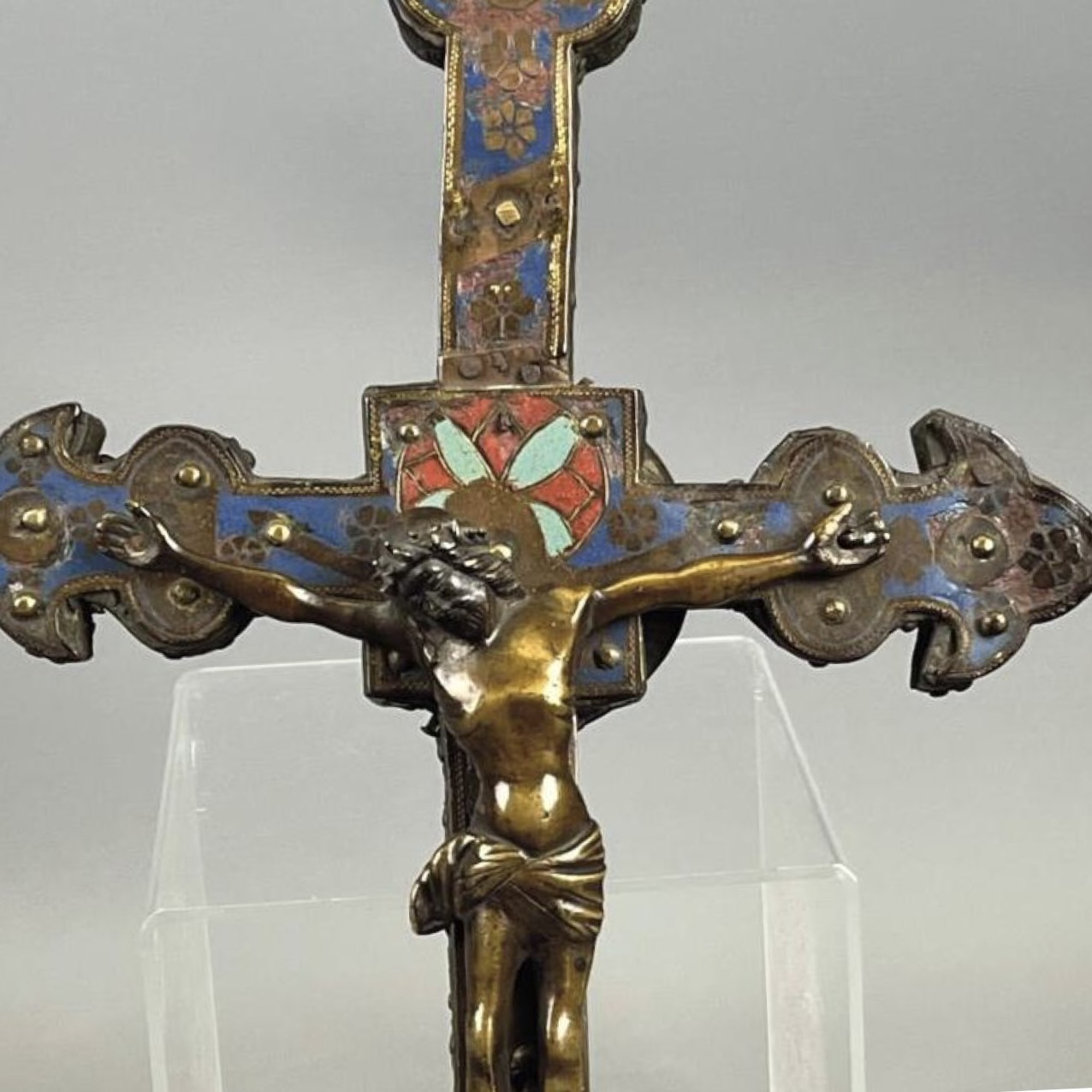
A Period Carved Oak Panel Removed From A Reconstructed 16th Century Dressoir. Depicting a foliate design growing from a stylised urn.
A Group Of 15th Century Oak Panels. Contained within an 18th Century oak frame - this group of panels was discovered set into the back of an 18th Century settle and removed. The Gothic heads and headwear are of academic and historical interest. A rare collection of early panels.
A Group Of 15th Century Oak Panels. Contained within an 18th Century oak frame - this group of panels was discovered set into the front of an 18th Century settle and removed. The central figure flanked by heraldic shields are of academic and historical interest. A rare collection of early panels..
A Late 19th Century Oil Painting. Depicting a 16th Century woman of substance dressed in period clothing holding a book and contained within a carved walnut frame. Extremely interesting - artist unknown.
A Late 19th Century Oil Painting. Depicting a 16th Century gentleman of substance dressed in period clothing with his dog on a lead contained within a carved walnut frame. Extremely interesting - artist unknown.
A Late 19th Century Oil Painting. Depicting a 16th Century lady of substance dressed in period clothing holding a shawl contained within a carved walnut frame. Extremely interesting - artist unknown.
A Late 19th Century Oil Painting. Depicting a 16th Century lady of substance dressed in period clothing holding a flower contained within a carved walnut frame. Extremely interesting - artist unknown.
A Late 19th Century Oil Painting. Depicting a 16th Century gentleman of substance dressed in a full suit of armour contained within a carved walnut frame. Extremely interesting - artist unknown.
An 18th Century Eight Day Long Case Clock. Fitted in an oak case striking on the hour with a seconds dial contained within within a brass and silver face. Made by Richard Street of Bridgnorth.
A Late 16th Early 17th Century Italian Walnut Dough Bin. The dough bin fitted with a rising lid sitting on the original base fitted with one long frieze drawer over a double cupboard base raised on shaped and carved bracket feet. A rare piece of early furniture of excellent colour with the original patina and handles.
A pair of large 16th/17th Century iron smelting ladles with engraved geometric designs on the handle
A rare 17th century waffle maker for making Communion Bread, the inner faces impressed with four bread designs. In excavated condition.
A 19th Century waffle maker for making Communion Bread, the inner faces impressed with bread designs.
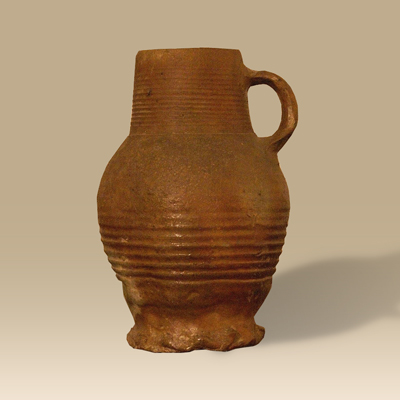
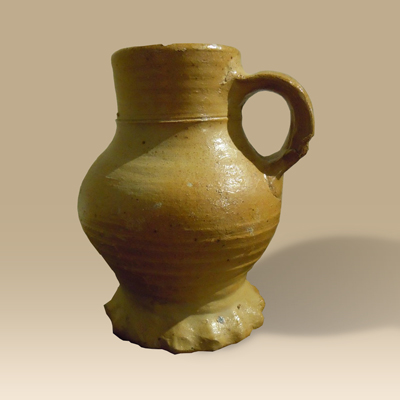
A small unrestored Belamine jug dating from Circa 1640 from Germany with a face mask and rose cipher.
A brass travelling folding Icon depicting the 12 feasts of the church 16th/17th Century - In excavated condition.

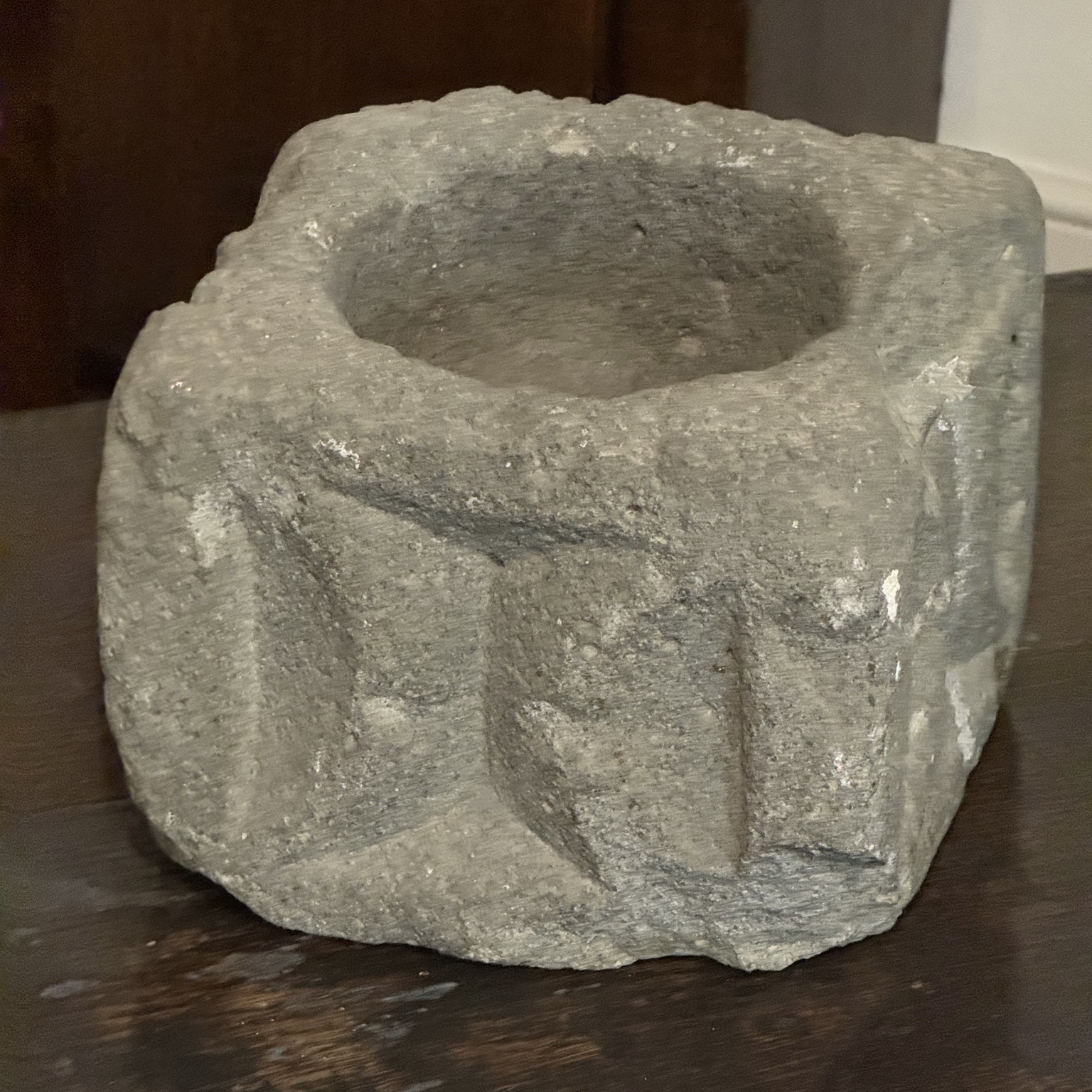
A Stone Gothic Mortar with crescent moon decoration dating from Circa 1500 acquired from the garden of a Chateau in St. Project, South West France.
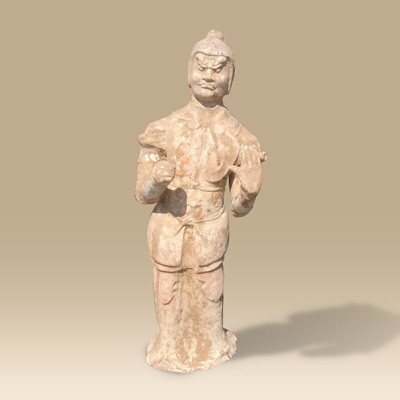
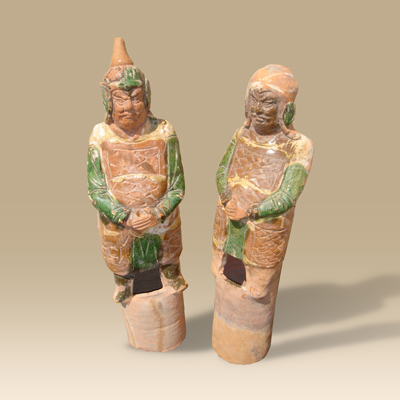
An extremely rare painted pottery Guardian dating from the Tang Dynasty 618 - 906 AD with traces of original paintwork. Both these figures have been subject to thermo luminescence analysis reports by Oxford Authentication.
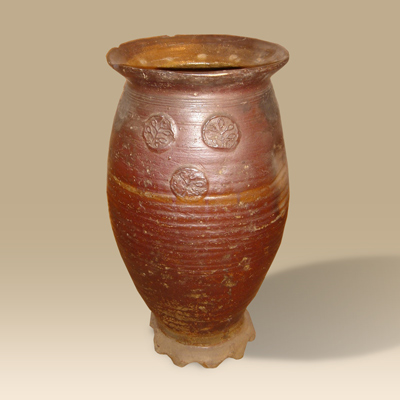
Glazed Chinese pot from an ancient wreck 10th - 12th Century Sung dynasty complete with export label.
An extremely rare pair of green amber-glazed Pottery Attendants dating from the Ming Dynasty
A pair of Han Dynasty 206 BC - 221 AD green glazed pots with a hunting scene depicted around the neck.
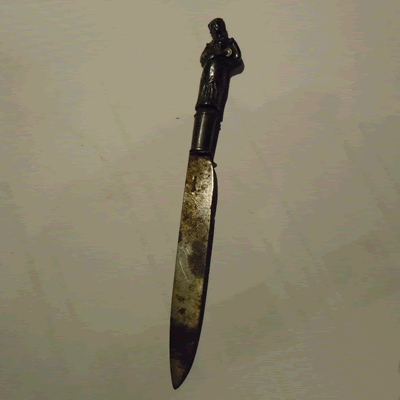
One 16th Century brass knife and two 17th Century knives all with figurative handles.Priced Individually.
A 16th/17th Century Devotional Walnut Carving. Depicting the crowned Virgin Mary sitting on a gothic seat holding baby Jesus on her lap with an open book/bible supported in her left hand.
A Superb Late 16th Century Renaissance Carved Wood Statue. From France, rare in the original polychrome, large size.
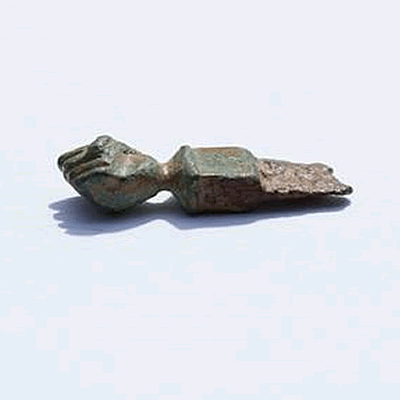
An Early Bronze Hammer Or Pipe Tamper. Unusual design with ‘ring and dot’ decoration which is a form of Saxon decoration.